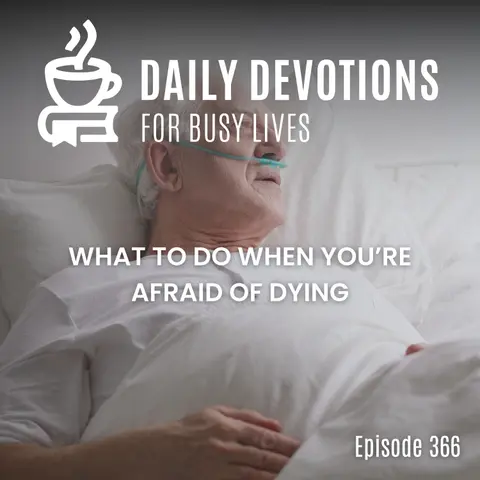
Why Does Jesus in Gethsemane Give Us Permission to Fear Death?
When Jesus faced the cross in the Garden of Gethsemane, He admitted His soul was crushed to the point of death and asked if the cup could pass. This raw display of human anguish offers profound comfort for believers who feel ashamed of their own anxiety about mortality. Discover why fearing death does not make you a weak Christian.
Key Takeaways
- Jesus openly confessed His deep distress and fear in the Garden of Gethsemane before facing His crucifixion.
- Bringing your fear of mortality to God is not a sin or a lack of faith, but a biblical pattern modeled by Christ.
- Hospice workers note a stark contrast in peacefulness at the end of life for those with a solid faith foundation.
- The apostle Paul used the metaphor of an earthly tent to describe our temporary physical bodies.
- God provides the Holy Spirit as a financial down payment or guarantee for our eternal home.
The Myth of the Fearless Christian
There is an unspoken rule in many church communities: if you truly trust God, you should never feel afraid of dying. Believers often suffer in silence, worrying that a sudden health diagnosis or the natural aches of an aging body will trigger anxiety about mortality. Because bringing up death at a family dinner or a Bible study tends to kill the mood, people keep their nighttime terrors locked away.
This isolation breeds shame. You start to wonder if your faith is defective. After all, if you really believed in heaven, wouldn't you march toward the end of life with a serene, unshakeable smile? But this expectation of instant, flawless fearlessness ignores the actual human experience of followers throughout Scripture.
When we look closer at the Gospels, we see that the greatest figures in faith history—and Jesus Himself—faced the reality of physical death with immense emotional gravity. Suppressing your fears does not make them go away; it only amplifies them in the dark.
What Gethsemane Teaches Us About Mortality
To understand how God views your fear, you need to look directly at Matthew 26 and the hours leading up to the crucifixion. In the Garden of Gethsemane, Jesus told His closest friends that His soul was crushed to the point of death. He fell to the ground and asked His Father if there was any other way to let the cup pass.
Think about that for a moment. The Son of God, who created the universe and knew perfectly well what awaited Him on the other side of the grave, experienced profound distress at the prospect of dying. He did not put on a brave, stoic face and pretend it did not hurt. He articulated His dread out loud to His Father.
If Jesus brought His terror of death to God, your own fear will not shock or disappoint your Creator. God will not be put off when you bring Him the messy, raw details of what your mind conjures up in the middle of the night. He is not learning anything new from you; He already knows the fragility of the human frame. Gethsemane proves that asking God for another way, or trembling at the edge of the unknown, is a recognized part of the human journey.
A Hospice Nurse Discovery on the Edge of Life
Experienced medical professionals often witness the practical difference that faith makes when the end approaches. A veteran hospice nurse who had sat at hundreds of bedsides noticed a striking pattern over her career. Some patients reached the final hours of life in sheer panic, their eyes darting around the room looking for an exit that did not exist. They fought fiercely against the dying process, even after they stopped responding verbally.
Other patients approached that exact same threshold looking remarkably ready, as if they were simply waiting for a door to open. When she discussed this phenomenon with pastors, the common thread became clear: the difference lay in where those individuals had placed their trust. Those with deep faith in Christ possessed an inner peace because they knew the address of where they were headed.
This does not mean they never felt a pang of fear along the way. Rather, it means their fear did not have the final say. They understood, as the apostle Paul wrote, that this physical existence is merely temporary.
Paul View on the Temporary Tent
The apostle Paul addresses this exact struggle in 2 Corinthians 5. He famously refers to our physical bodies as earthly tents. A tent is a structure you put up fully knowing you will eventually take it down. Paul viewed the human body as temporary from day one, while the permanent house in heaven was already built.
Paul also emphasizes that God gave us His Holy Spirit as a guarantee—using an ancient business term for a financial down payment proving the rest of the purchase was coming. This means a Christian confidence about the future does not rely on what we can see with our physical eyes. Our vision is limited to a wearing-out body and an unknown calendar date, but God's promises are anchored in a deposit He has already made.
To explore more devotional insights on finding calm at the start of your day, Listen to the full episode of Daily Devotions for Busy Lives. Take a few minutes to bring your specific worries to God, read through 2 Corinthians 5 slowly, and share your heart with a trusted friend who will listen without changing the subject.
Frequently Asked Questions
Is it a sin for a Christian to be afraid of dying?
No, experiencing fear or anxiety about death is not a sin. Even Jesus expressed deep emotional distress and sorrow in the Garden of Gethsemane when facing His own death. God welcomes your honest admissions of fear rather than demanding artificial stoicism.
Why did the apostle Paul call the human body a tent?
Paul used the tent metaphor in 2 Corinthians 5 to illustrate that our physical bodies are temporary shelters. Just as a tent is designed to be taken down, our earthly life is brief compared to the permanent spiritual home prepared for believers in heaven.
What does the Bible mean when it calls the Holy Spirit a guarantee?
In 2 Corinthians 5:5, the word translated as guarantee refers to an ancient business down payment. God giving us His Spirit serves as proof and a binding pledge that He will fulfill His promise of eternal life.
How can I overcome nighttime anxiety about my mortality?
Start by explicitly telling God what specific aspects of dying make you afraid, just as Jesus did in Gethsemane. Follow this by slowly reading the first ten verses of 2 Corinthians 5, paying close attention to the confidence Paul expresses through faith rather than sight.