
The Holiness of Tears
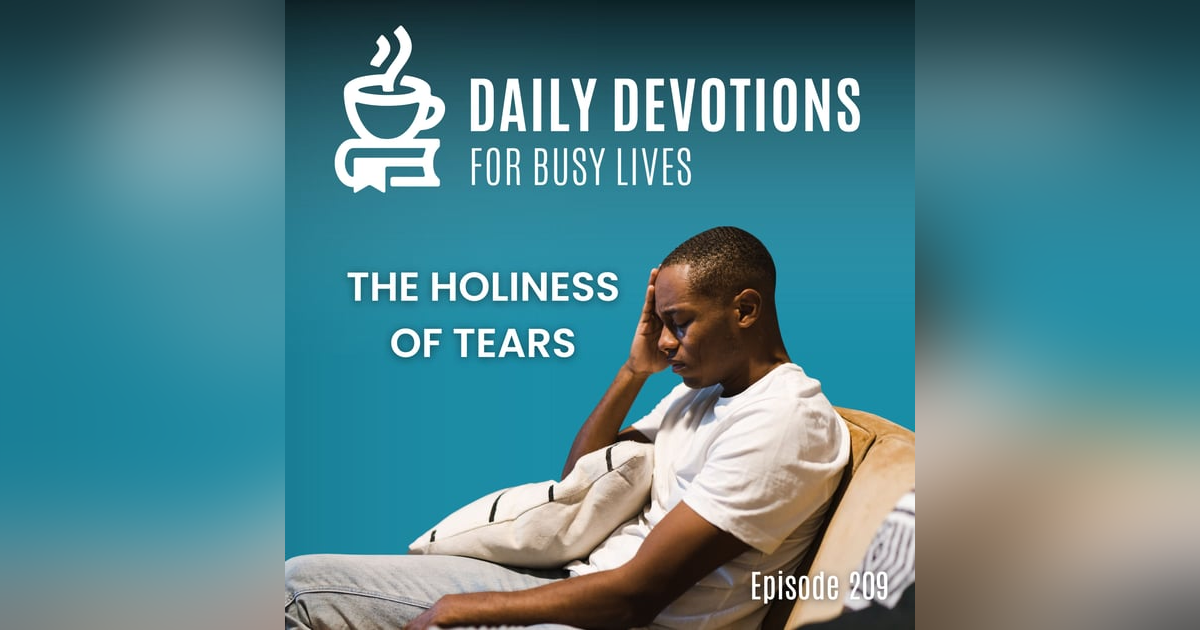



Staying strong and holding it together isn't always what faith looks like. In this episode, discover why God doesn't look away from your tears, and why crying out to Him is one of the most honest acts of trust you can offer.
There is an unspoken rule in a lot of Christian circles. Strong faith means staying composed. Smiling through the hard stuff. Saying "I'm blessed" when someone asks how you're doing, even when you are barely holding it together.
But that is not biblical faith. That is performance. And it is costing a lot of people the very comfort God is trying to give them.
When Elizabeth Groves' husband was diagnosed with terminal cancer, she knew all the things a person of faith is supposed to do. Stay strong. Be an example to the kids. Hold it all up so nobody else crumbles. But she looked at her husband and her children and realized something: if she pretended she was fine, she would be lying to everyone in the house, including God.
So she made a decision. Right at the beginning of the hardest season of their lives, she gathered her family and established one simple house rule: in this home, it is always okay to cry.
That decision, grounded in what Scripture actually says about grief and tears, changed everything for her family.
Psalm 56:8 is one of the most tender verses in the Bible. It tells us that God keeps track of every sorrow, collects every tear in a bottle, and records each one in His book. That is not the picture of a God waiting for you to compose yourself before He shows up. That is a God paying close, careful attention to every moment of pain you have ever carried.
The Psalms are full of honest, unfiltered grief. Jesus wept at the tomb of Lazarus. In the garden before His death, Hebrews 5:7 tells us He offered up loud cries and tears. If the Son of God grieved openly and loudly, then composure was never the standard.
Grief is not the opposite of faith. In a broken world, grief is often what faith looks like. And the tears we suppress don't disappear. They go underground, hardening into bitterness, numbness, and a quiet distance from God that is difficult to explain.
Through Elizabeth's story and the tender promise of Psalm 56:8, this episode makes the case that bringing God your honest pain, tears and all, is not a sign of weak faith. It is one of the deepest acts of trust you can offer Him.
BY THE TIME YOU FINISH LISTENING, YOU'LL DISCOVER:
- Why performing composure in grief is costing you the comfort God is already trying to give
- What Psalm 56:8 reveals about how personally and carefully God attends to your pain
- Why suppressed grief doesn't disappear, and what it costs you spiritually when it goes underground
You do not have to be fine. You just have to be honest.
God is already in the room, already collecting every tear, already recording every sorrow. Bring Him the real thing.
Share This Episode:
https://www.dailydevotionsforbusylives.com/209
Need Prayer? Leave me a voicemail:
https://www.dailydevotionsforbusylives.com/voicemail
Want to keep these devotions coming? Please consider supporting this podcast.
https://www.dailydevotionsforbusylives.com/support/
Connect with Bart
Facebook Page: https://www.facebook.com/dailydevotionsforbusylives
Website: https://www.dailydevotionsforbusylives.com
Feeling spiritually drained? Start here. Download your free copy of my eBook Making Time for Jesus here.
Track 1 00:00:01
Her husband had just been diagnosed with terminal
Track 1 00:00:04
cancer. Elizabeth Groves was a follower of Jesus and knew the
Track 1 00:00:07
Bible. Even though she had faith in God, she was completely
Track 1 00:00:11
falling apart. She thought about how you're supposed to handle
Track 1 00:00:14
something like this. Aren't you supposed to stay strong and keep
Track 1 00:00:17
it together so you can be an example to the kids? Hold it all
Track 1 00:00:22
up so nobody else crumbles. But something just didn't sit right
Track 1 00:00:26
with her. Because she looked at her husband and she looked at
Track 1 00:00:29
her children, and she thought, "If I pretend I'm fine right now,
Track 1 00:00:33
I'm lying to everyone in this house, including God." So she
Track 1 00:00:38
made a decision. Right there at the beginning of what would be
Track 1 00:00:42
the hardest season of their she sat everyone down and
Track 1 00:00:46
established one simple house rule. "In this home," she said,
Track 1 00:00:50
"it's always okay to cry." You had to apologize, or hold it
Track 1 00:00:55
together for someone else's comfort. No sneaking off to the
Track 1 00:00:59
bathroom to break down in private and then coming back
Track 1 00:01:01
with a straight face. The tears were welcome any time and for
Track 1 00:01:06
any reason. It changed something in that house. We'll come back
Track 1 00:01:10
to why in a moment, but first…
Track 1 00:01:15
Welcome to Daily Devotions for Busy Lives I'm Bart Leger.
Track 1 00:01:19
There's an unspoken rule in a lot of Christian circles, maybe
Track 1 00:01:23
you felt it. It goes something like this: "Strong faith means
Track 1 00:01:27
staying composed, smiling through the hard stuff, saying,
Track 1 00:01:31
'I'm blessed' when someone asks how you're doing, even when
Track 1 00:01:34
you're barely holding it together.' And I want to say
Track 1 00:01:38
something clearly today: that is not biblical faith. That's a
Track 1 00:01:42
performance. And it's costing a lot of people the very comfort
Track 1 00:01:46
God's trying to give them. Here's what Scripture says in
Psalm 56 00:01:50
8, "You keep track of all my sorrows, you have
Psalm 56 00:01:55
collected all my tears in your bottle, you have recorded each
Psalm 56 00:01:57
one in your book." Go back and read that slowly. God keeps
Psalm 56 00:02:05
track of your sorrows. He collects your tears, and He
Psalm 56 00:02:08
records each one. This is not the description of a God who's
Psalm 56 00:02:12
waiting for you to pull yourself together. That's the description
Psalm 56 00:02:15
of a God who's paying close and careful attention to every
Psalm 56 00:02:20
moment of pain you've ever carried.
Psalm 56 00:02:22
Your tears are not a problem to Him. And they're not the
Psalm 56 00:02:26
evidence that your faith is weak. They are really significant to
Psalm 56 00:02:31
God. They're so significant to Him that He keeps an account of
Psalm 56 00:02:35
every single one. The Psalms are saturated with honest grief.
Psalm 56 00:02:39
Psalm 22 opens with: "My God, my God, why have you abandoned me?"
Psalm 56 00:02:44
Psalm 88 ends with the word: "Darkness" with no resolution,
Psalm 56 00:02:49
no tidy bow, just raw pain laid before God. The writers of
Psalm 56 00:02:55
Scripture didn't present a sanitized version of their inner
Psalm 56 00:02:58
lives like we do sometimes. They brought the full weight of their
Psalm 56 00:03:02
grief right to God, and God included those cries in His Word.
Psalm 56 00:03:07
And then there's Jesus. John 11: 35, the shortest verse in the
Bible:"Jesus wept." "Lazarus has died." Jesus knew He was
Bible:about to raise him from the dead, but He cried anyway. Because the
Bible:grief of the people around Him was real, and He didn't stand at
Bible:a distance from it. He entered into it. Hebrews 5: 7 goes even
Bible:further, telling us that Jesus offered up loud cries and tears
Bible:in the garden before His death. Not just quiet, composed,
Bible:dignified weeping, but loud cries: "The Son of God!" in full
Bible:display of His humanity cried out with everything He had. If
Bible:that is what faith looked like in Jesus, then I believe we need
Bible:to rethink what we've been calling strength. Grief isn't
Bible:the opposite of faith. Grief is what faith looks like in a
Bible:broken world. It means you loved something. It means you're
Bible:honest enough to feel the weight of loss, rather than pretending
Bible:it isn't there. And it means you're bringing that weight to
Bible:the only one who can really carry it. And what tends to
Bible:happen when we suppress grief is that it doesn't disappear. But
Bible:it goes underground. It hardens into bitterness. And it comes
Bible:out sideways as irritability or numbness or a distance from God
Bible:that we can't quite explain. It can't quite explain. The tears
Bible:that weren't cried don't go away. They just find another exit.
Bible:God's invitation in Psalm 56 is not to compose yourself for His
Bible:benefit. It's to bring Him the real thing, the full weight of
Bible:what you're carrying, the trust that He can handle it. Because
Bible:He can. He already knows. And He's already in the room. He's
Bible:not waiting for you to compose yourself before He shows up
Bible:because He's already there. And He's collecting every tear,
Bible:recording every sorrow. Now let's get back to Elizabeth. So
Bible:why did One Simple House Rule change everything for
Bible:Elizabeth's family? Because giving everyone permission to
Bible:cry out loud meant nobody had to carry their grief alone in the
Bible:dark. The tears that might have festered into bitterness, into
Bible:exhaustion, or into silent distance between people who
Bible:loved each other could come out in the open where they could be
Bible:seen, where they could be shared. She pointed to a single verse as
Bible:the foundation for that decision, Hebrews 5: 7, which says that
Bible:Jesus Himself offered up loud cries and tears in the garden
Bible:before His death. If the Son of God wept loudly, she thought,
Bible:then crying in this house is not a crisis of faith. It's faith
Bible:doing exactly what it was supposed to do. And Psalm 56: 8
Bible:tells us that God doesn't look away from those tears. He
Bible:collects them. He records them. count of every sorrow. So here's
Bible:the question I want to leave you with today. What tears are you
Bible:trying not to cry right now? What grief are you keeping under
Bible:control because you think that's what faith looks like? You're
Bible:not holding it together for God because God already knows. He's
Bible:not waiting for you to get yourself composed before He will
Bible:show up. He's already there in the room with you and watching,
Bible:already holding every tear you've been afraid to cry. You
Bible:don't have to be fine. You just have to be honest. And here's
Bible:today's challenge. Find a quiet place and give yourself
Bible:permission to be honest with God about something you've been
Bible:holding together. You don't have to have the right words. You
Bible:don't have to sound composed or anywhere near theological. Just
Bible:tell Him what hurts. If the tears come, just let them come.
Bible:He's already collecting them. He's already recorded this
Bible:moment before you got there. Bring Him the real thing and
Bible:trust that He's big enough to hold it. Lord, thank you that
Bible:you don't look away from our pain. Thank you that you keep
Bible:track of every sorrow and collect every tear. Forgive us
Bible:for the times we've composed ourselves instead of bringing
Bible:you the truth. Teach us that honest grief is not weak faith,
Bible:it's trust. Help us cry out to you the way your Son did with
Bible:everything we have, knowing you're already there. In Jesus'
Bible:name, Amen. This podcast runs on the generosity of listeners just
Bible:like you. If Daily Devotions for Busy Lives has been an
Bible:encouragement in your life, would you consider supporting it
Bible:with a one-time gift or becoming a monthly supporter? It helps
Bible:keep these devotions coming every single week. You can give
Bible:at
Bible:DailyDevotionsForBusyLives.com/support . I thank you so much. Thanks
Bible:for joining me on Daily Devotions for Busy Lives.
Bible:Remember, God keeps track of every sorrow and collects every
Bible:tear. You don't have to be fine. You just have to be honest with
Bible:Him. Come back next time for more encouragement to help you
Bible:live grounded in God's truth. Until then, God bless and have a
Bible:great day.



