The Courage to Say "I Was Wrong"
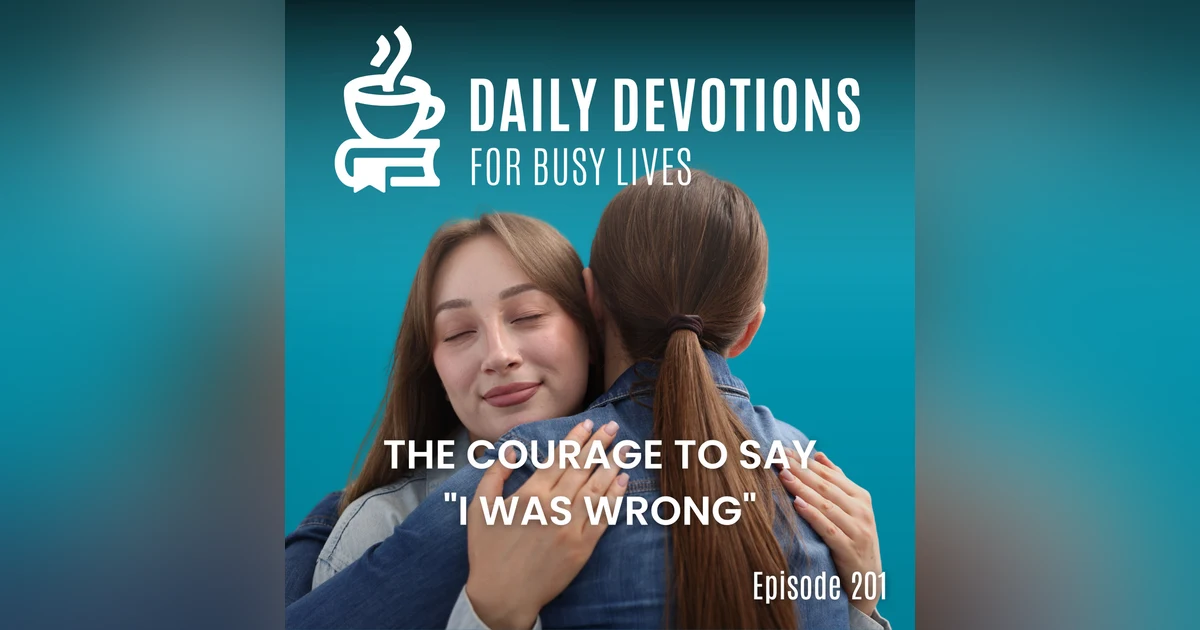


Ever avoided apologizing because admitting you were wrong felt too risky? In this episode, discover the spiritual power of a genuine, defenseless apology, and how four simple words might heal what years of excuses never could.
Have you ever hurt someone and found yourself wrapping your apology in an excuse just to protect yourself?
"I'm sorry, but if you hadn't…" "I'm sorry, but I was stressed." "I'm sorry, but you need to understand my side." The moment you add "but" to an apology, the person on the other end doesn't hear the sorry; they hear the excuse. Human nature constantly wants to justify itself. When we wound someone, our instinct is to explain, minimize, or shift blame. But a genuine, defenseless apology—one with no caveats, no spin, no self-protection- is one of the most powerful and Christlike things a person can offer.
In this episode, we explore the remarkable story of Louie Amundson, whose ten-year-old daughter's school project about bullying resurfaced a memory he hadn't touched in over twenty years. He remembered a boy he and his friends had bullied through the hallways of their Alaska junior high. Instead of brushing it aside, Louie tracked down that boy, now a grown man named ChadMichael, and sent a message with no excuses and no explanations. Just: I was wrong. I'm sorry. You deserved better.
Through his story and the healing promise of James 5:16, you'll see that confession and healing are directly connected. Not confession and shame. Not confession and rejection. Confession and healing. Dropping your defenses and owning your mistake might be the most courageous thing you do today, and it might be exactly what someone has been waiting years to hear.
BY THE TIME YOU FINISH LISTENING, YOU'LL DISCOVER:
- Why the "but" apology does more damage than no apology at all
- How James 5:16 directly connects honest confession to the healing of broken relationships
- The courage to reach out to one person this week with a genuine, defenseless apology
Four words, "I was wrong," might be the most healing sentence in the human language. And someone in your life may have been waiting years to hear you say them.
Share This Episode:
https://www.dailydevotionsforbusylives.com/201
Need Prayer? Leave me a voicemail:
https://www.dailydevotionsforbusylives.com/voicemail
Want to keep these devotions coming? Please consider supporting this podcast.
https://www.dailydevotionsforbusylives.com/support/
Connect with Bart
Facebook Page: https://www.facebook.com/dailydevotionsforbusylives
Website: https://www.dailydevotionsforbusylives.com
Feeling spiritually drained? Start here. Download your free copy of my eBook Making Time for Jesus here.
Track 1 00:00:01
His 10-year-old daughter was working on a school
Track 1 00:00:03
project about bullying when she looked up at her dad and asked,
Track 1 00:00:06
Have you ever bullied anybody? Louis Amundsen could have
Track 1 00:00:11
laughed it off. He could have said, Oh, we were just kids. But
Track 1 00:00:14
he didn't. He sat there. And while he was thinking about it,
Track 1 00:00:19
a memory surfaced. One he hadn't touched in over 20 years. A boy,
Track 1 00:00:25
he and his friends had followed through the hallways of their
Track 1 00:00:28
Alaska junior high, threatening him and humiliating him. Louis
Track 1 00:00:32
answered his daughter honestly. He said, Yes, I'm afraid I did.
Track 1 00:00:37
And then he couldn't let it go. Several weeks later, he tracked
Track 1 00:00:41
down that boy, now a grown man, his name, Chad Michael, and
Track 1 00:00:46
found him on Facebook and typed out a message. No excuses. No
Track 1 00:00:50
explanations. Just, I was wrong. I'm sorry. You deserved better.
Track 1 00:00:56
He hit send and waited. We'll find out what happened. But
Track 1 00:01:01
first,
Track 1 00:01:03
Welcome to Daily Devotions for Busy Lives. I'm Bart Leipzig.
Track 1 00:01:08
And today we're talking about something that sounds simple,
Track 1 00:01:11
but takes enormous courage. And that is admitting you were wrong.
Track 1 00:01:16
That's hard for most of us. I know it's hard for me. Human
Track 1 00:01:20
nature constantly wants to justify itself. When we hurt
Track 1 00:01:24
someone, our instinct is to offer an apology wrapped in an
Track 1 00:01:27
excuse. I'm sorry, but if you hadn't done. But true spiritual
Track 1 00:01:34
maturity is found in owning our mistakes without caveats.
Track 1 00:01:37
Dropping our defenses and offering a sincere confession
Track 1 00:01:41
not only can heal fractured relationships, but also deeply
Track 1 00:01:45
reflects the humility of Christ. James, chapter 5, verse 16 says,
Track 1 00:01:50
Confess your sins to each other and pray for each other so that
Track 1 00:01:53
you may be healed. The earnest prayer of a righteous person has
Track 1 00:01:58
great power and produces wonderful results. Notice what
Track 1 00:02:01
James connects. Confession and healing. There's a direct link
Track 1 00:02:06
between the courage to say, I was wrong and the restoration of
Track 1 00:02:10
broken things. But most of us resist that link with everything
Track 1 00:02:14
we have. When we hurt someone, the first thing our hearts do is
Track 1 00:02:19
build a defense case. We try to explain and minimize our
Track 1 00:02:23
responsibility. We offer what I call the but apology. I'm sorry
Track 1 00:02:28
I said that, but you provoked me. I'm sorry I wasn't there, but
Track 1 00:02:33
I've been really busy. I'm sorry, but you need to understand my
Track 1 00:02:37
side. The moment you add but to an apology, you've turned a
Track 1 00:02:42
confession into an argument. And the person on the other end
Track 1 00:02:46
doesn't hear the sorry. They hear the excuse. A genuine
Track 1 00:02:51
defenseless apology sounds different. It says, I was wrong.
Track 1 00:02:56
There's no excuse. You deserved better. Will you forgive me? You
Track 1 00:03:01
don't put a spin on it or deflect. No self-protection.
Track 1 00:03:04
Just the raw truth. You don't hear that kind of apology often
Track 1 00:03:08
because it requires vulnerability. Admitting you
Track 1 00:03:12
were wrong means giving up the power to control the narrative.
Track 1 00:03:15
It means standing in front of another person with nothing to
Track 1 00:03:18
hide behind. And that feels terrifying. But it's also
Track 1 00:03:24
Christ-like. Jesus, who had every right to defend himself,
Track 1 00:03:28
stood silent before his accusers. He didn't justify and he didn't
Track 1 00:03:32
try to explain. He simply absorbed the cost.
Track 1 00:03:40
Think about the relationships in your life that have been
Track 1 00:03:46
fractured.
Track 1 00:03:52
James says confession leads to healing.
Track 1 00:03:55
James says confession leads to healing. Maybe you're the one
Track 1 00:03:56
who needs to say it. Maybe there's a conversation you've
Track 1 00:03:59
been avoiding for weeks or months, maybe even years because
Track 1 00:04:03
admitting fault feels too risky. Maybe you've tried to apologize
Track 1 00:04:07
before, but, and there's that word, you padded it with so many
Track 1 00:04:11
explanations that the other person never actually heard you
Track 1 00:04:14
take full responsibility. James says confession leads to healing.
Track 1 00:04:20
Not always instantly and not always neatly. But the process
Track 1 00:04:24
of healing begins when someone has the courage to drop their
Track 1 00:04:28
defenses and tell the truth. So back to Louie. Chad Michael read
Track 1 00:04:32
that message, set his phone down, and wept. The apology didn't
Track 1 00:04:37
erase the pain of being bullied as a boy. He'd spent 20 years
Track 1 00:04:41
carrying those wounds, but Louie was the only person who had ever
Track 1 00:04:45
said he was sorry. He wrote back, In 20 years, you are the only
Track 1 00:04:51
one. I hope you can proudly tell your daughter that we are good.
Track 1 00:04:55
Louie didn't make excuses. Just, I was wrong. And it changed
Track 1 00:05:00
everything. That's what James is talking about. It might be the
Track 1 00:05:03
most courageous thing you do today. And it might be exactly
Track 1 00:05:07
what someone in your life has been waiting 20 years to hear.
Track 1 00:05:11
For 20 years, Chad Michael carried that wound. 20 years of
Track 1 00:05:14
wondering if anyone would ever acknowledge what happened. And
Track 1 00:05:18
healing began with three simple words. I was wrong. Is there
Track 1 00:05:24
someone in your life waiting to hear those words from you?
Track 1 00:05:26
Here's today's challenge. Ask the Holy Spirit to bring one
Track 1 00:05:29
person to mind. Someone you've hurt or wronged. Where you've
Track 1 00:05:33
never offered a genuine defenseless apology. Maybe it's
Track 1 00:05:37
recent. Maybe it's from years ago. This week, reach out and
Track 1 00:05:40
don't build a case. Don't explain your side. Simply say, I
Track 1 00:05:44
was wrong. I'm sorry. You deserved better. And then, leave
Track 1 00:05:48
the outcome to God. Lord, our pride makes it so hard to admit
Track 1 00:05:53
when we're wrong. We hide behind excuses and we shift blame. And
Track 1 00:05:58
we do our best to protect ourselves at the cost of broken
Track 1 00:06:01
relationships. Give us the courage to drop our defenses.
Track 1 00:06:04
Soften our hearts to confess without buts. And where our
Track 1 00:06:08
honest apology can bring healing, give us the bravery to say the
Track 1 00:06:11
hardest, simplest words. I was wrong. In Jesus' name, amen. If
Track 1 00:06:18
this episode encouraged you, would you share it with someone
Track 1 00:06:21
who might need the courage to offer an honest apology? Just
Track 1 00:06:24
send them the link from the show notes. It might be the nudge
Track 1 00:06:27
they need to take that first step. Thanks for joining me on
Track 1 00:06:31
Daily Devotions for Busy Lives. Remember, a genuine defenseless
Track 1 00:06:36
apology might be the most courageous and Christ-like thing
Track 1 00:06:38
you do today. Come back next time for more encouragement to
Track 1 00:06:42
help you live grounded in God's truth. Until then, God bless and
Track 1 00:06:47
have a great day.


