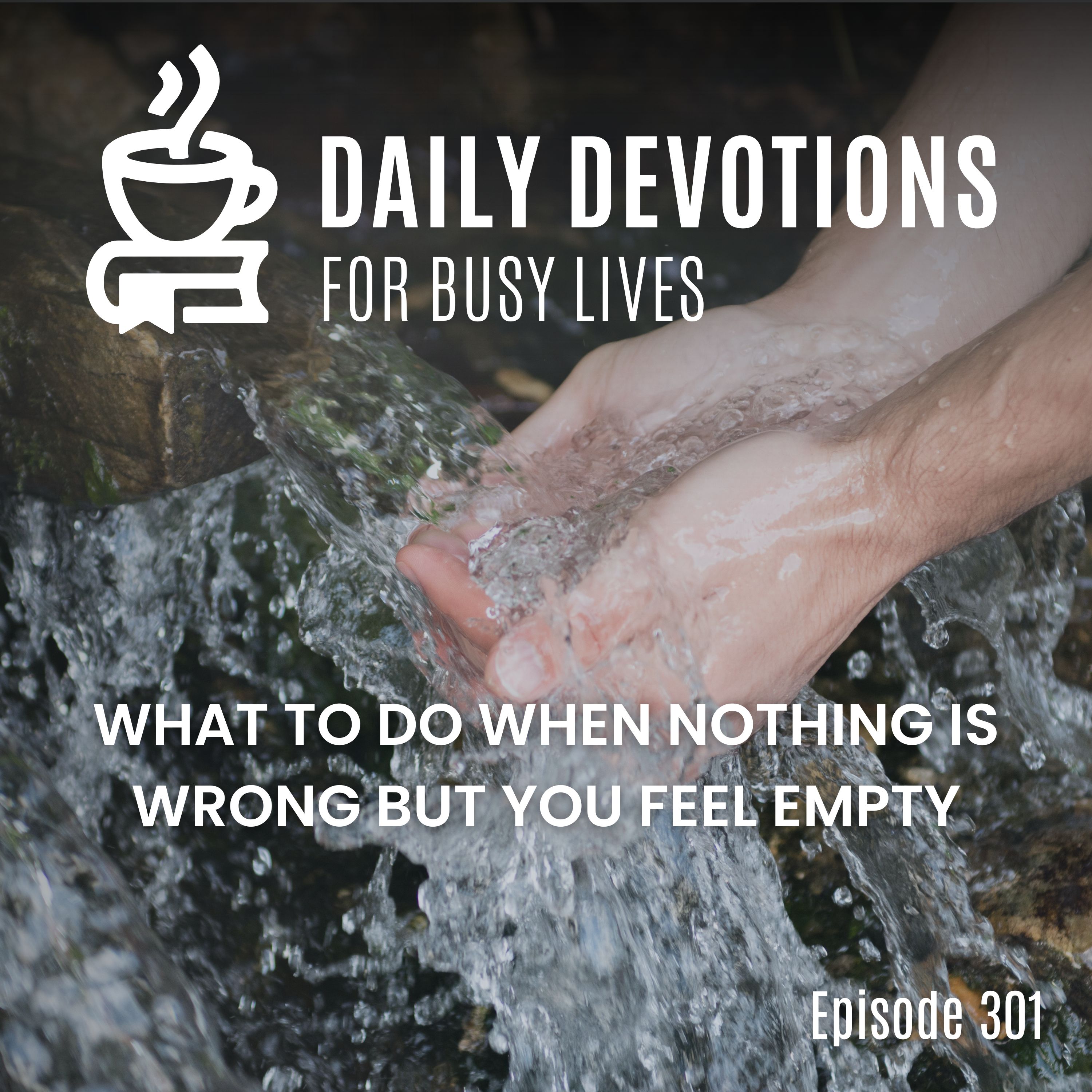
Why Christians Feel Empty When Life is Good: Spotting Cracked Cisterns
When your life is stable, your bills are paid, and your family is functioning well, waking up with a deep, unexplained spiritual emptiness can feel deeply confusing. This article explores why comfortable, busy Christians often experience a hollow soul, how we unknowingly trade God's living water for modern cracked cisterns, and how to return to an unhurried, daily walk with the true source.
Key Takeaways
- Spiritual dryness frequently strikes during seasons when life looks great on paper and there is no obvious crisis to fix.
- According to Jeremiah 2:13, the root issue is abandoning God (the fountain of living water) and digging cracked cisterns.
- Modern cisterns include work, screens, and endless tasks that offer a quick swallow of relief but leave us thirsty by morning.
- Paying attention to ordinary, daily blessings—much like the 1,000 gifts exercise—helps pull our focus back to God's presence.
- Recovering from soul emptiness requires unhurried, screen-free time in prayer and Scripture rather than simply doing more religious autopilot habits.
The Paradox of Unexplained Spiritual Emptiness
There is a unique kind of exhaustion that comes from being tired while your life is objectively going well. Many believers spend years building stable careers, nurturing healthy families, and participating faithfully in church activities, only to wake up one morning wondering where the joy went. On paper, everything checks out. There are no unpaid bills, no health emergencies, and no broken relationships demanding immediate intervention. Yet, beneath the surface, there is a hollow ache—a quiet dryness that turns every good day into a blur of gray.
This kind of emptiness is often more disorienting than an outright crisis. When a crisis hits, you know what to pray for, who to call, and what problem needs solving. But when nothing is technically wrong, you cannot even articulate what is the matter. You find yourself moving through your routines on autopilot, reading your Bible because it is the right habit, and saying grace before dinner without tasting the food. The soul has quietly gone on strike, refusing to be sustained by a mechanical life.
In ministry and everyday discipleship, this phenomenon is remarkably common among conscientious people. We assume that if we keep all the plates spinning, our spiritual life will naturally take care of itself. But a busy schedule packed with good works and functional responsibilities can easily mask a deeper starvation. We mistake activity for vitality.
Understanding Jeremiah and the Cracked Cisterns
God diagnosed this exact heart condition thousands of years ago through the prophet Jeremiah. In Jeremiah 2:13, the Lord rebukes His people for committing two specific errors: abandoning Him as the fountain of living water, and digging for themselves cracked cisterns that could hold no water at all.
To understand the power of this imagery, consider the difference between a natural spring and a man-made water storage tank. A spring bubbles up continuously from an underground source, flowing freely and never running dry. A cistern, on the other hand, is a hole carved into rock designed to catch and store rainwater that you have hauled or waited for. At best, a cistern is a secondary backup. But when those cisterns develop cracks, the water leaks out just as fast as you pour it in.
God’s people had traded an active, life-giving spring for a broken tank that required endless maintenance. They were still trying to quench their thirst, but they were drinking from the wrong place. And this is precisely how emptiness creeps into a comfortable modern life.
What Modern Cisterns Look Like
We rarely commit overt sins when we experience this specific brand of burnout. Instead, we build modern cracked cisterns out of entirely acceptable, even necessary, parts of daily life:
- Endless productivity: Telling yourself that once you finish your to-do list, you will finally feel at peace.
- Digital escapism: Grabbing your phone during every micro-moment of downtime to numb your mind with scrolling.
- Professional validation: Sips of self-worth gathered from achieving the next goal at work or keeping a spotless home.
None of these things are inherently evil. However, they are cracked cisterns. They cannot hold water. They might give you a tiny emotional swallow to get you through the next hour, but by morning, you wake up just as parched as before.
How to Return to the Fountain of Living Water
When you realize you have been working yourself to exhaustion hauling water to a broken tank, the solution is remarkably simple, even if it feels difficult to execute. You have to stop hauling and start drinking from the source again. For many, that means breaking the cycle of religious autopilot.
Author Ann Voskamp famously faced this exact internal desert while running a demanding family farm and raising a large household. Outwardly, her life was full and faithful; inwardly, she felt completely hollow. The turning point came not through a massive life overhaul, but through a radical shift in attention. A friend challenged her to write down one thousand specific gifts she had been walking past without noticing—the sound of a child laughing, the feeling of warm water on her hands while washing dishes.
This exercise was not about positive thinking; it was about waking up to the reality that God was already right there in the ordinary noise of her day. She had simply been too busy rushing to notice Him.
Practical Steps to Refill a Dry Soul
If you suspect you have been living off cracked cisterns, try implementing these grounded steps today:
- Identify your primary cistern: Name the specific habit, screen, or task you turn to when you feel restless or empty.
- Disconnect to reconnect: Carve out 15 unhurried minutes with your phone entirely out of reach.
- Open the Word without an agenda: Read a short passage of Scripture simply to listen, not to prepare a lesson or check a box.
- Practice radical presence: Notice three ordinary blessings happening around you right now, and thank God for them explicitly.
Conclusion: Your Invitation to Slow Down
An empty soul in the middle of a full life is a gracious alarm bell. It is God gently telling you that you were never designed to run on the stagnant water of human effort and digital distraction. The fountain of living water has been within reach all along, waiting for you to slow down, put down your bucket, and drink.
If you are tired of running on fumes and want encouragement to help you stay anchored in God's truth during busy seasons, take a moment to listen to the full audio conversation. Listen to the full episode and discover how to trade your exhaustion for unhurried time with the source of life.
Frequently Asked Questions
Why do I feel empty when my life is going well?
Feeling empty during stable seasons often happens when your soul is surviving on superficial routines rather than deep, unhurried fellowship with God. Outward success and functioning families do not automatically nourish the inner spirit, leaving a disconnect between your external life and internal vitality.
What does the Bible mean by cracked cisterns in Jeremiah 2:13?
In biblical times, a cistern was a man-made underground reservoir used to store rainwater. Cracked cisterns leaked water constantly, requiring endless labor to refill. God used this metaphor to describe how people abandon Him (the living spring) to rely on unreliable, self-made sources of fulfillment that never truly satisfy.
How can I tell the difference between a healthy routine and a cracked cistern?
A healthy spiritual habit draws you closer to God and leaves your soul anchored and refreshed over time. A cracked cistern—such as endless scrolling, compulsive busyness, or seeking constant validation—offers a fleeting burst of relief but leaves you waking up spiritually thirsty and exhausted by morning.
What is the 1,000 gifts practice mentioned in the episode?
Popularized by Ann Voskamp, the 1,000 gifts practice involves intentionally noticing and writing down everyday blessings—such as the sound of laughter or warm water on your hands—to train your awareness to recognize God's active presence in ordinary, mundane moments.