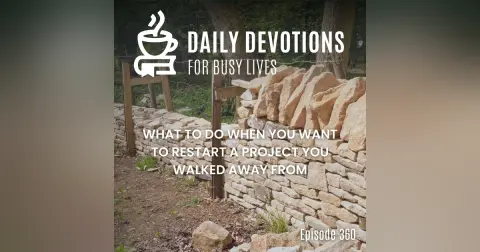
What to Do When You Want to Restart a Project You Walked Away From


Key Takeaways
- Many people abandon important projects or ministries because walking away felt right at the time, but they later wonder if they quit too soon.
- The fear of restarting often stems from having to admit an unfinished first attempt and telling others you are trying again.
- Drawing inspiration from Nehemiah, you should assess the broken pieces quietly and realistically before announcing any major comeback.
- Stephen Bedard's journey illustrates how a small, temporary commitment—such as filling in as an adjunct pastor for three months—can reignite a dormant calling.
- Progress comes from identifying the smallest possible piece of your abandoned project and tackling that manageable step before the week ends.
You let something go and now you wonder if you quit too soon. Learn what Nehemiah did for three days and one night before he said a word about rebuilding.
A lot of us have something we started with everything we had and then let go of. A book you were writing, or a ministry you were sure God had put in front of you. Walking away felt right at the time, and it may well have been right. Now you look at that thing and wonder whether you quit too soon. What keeps most people from going back is the cost of the restart itself. It means admitting the first run never got finished, and it means telling people who watched you walk away that you're trying again.
This episode opens with Stephen Bedard, who pastored the same area churches for nine years and then stepped away with no church lined up. The break stretched into three years. He got sick, and his family went through a rough patch. The pulpit started to feel like a part of his life that was over.
Nehemiah 2:17 puts you in front of a ruin: "But now I said to them, 'You know very well what trouble we are in. Jerusalem lies in ruins, and its gates have been destroyed by fire. Let us rebuild the wall of Jerusalem and end this disgrace!'" Start with what those ruins were. That wall had already been quit on. Ezra chapter 4 records an earlier rebuilding effort shut down by royal order, so the work in front of Nehemiah was work people had already tried and abandoned.
Then look at what he did before he said a word. He reached Jerusalem and stayed three days. Then he went out at night with a few men, telling nobody what God had put in his heart. He rode the length of the wall past the broken places and the burned gates. Verse 16 says the officials had no idea where he'd been. He counted the broken places before he announced anything.
Now listen to the verb in verse 17. Let us rebuild, he says, in the first person plural. Nehemiah had the king's letters and the authority to use them, and the first thing out of his mouth was an invitation.
Chapter 3 shows how they did it. Somewhere around forty crews, and the chapter keeps repeating the same detail about them. This man repaired the section opposite his house. That one worked beside his own house. Nobody got handed the whole wall. Every man took the stretch in front of where he already lived, and the whole thing went up in fifty-two days.
Bart shares his own version of it. He left college after his first year and came back later to finish, which eventually led to a doctorate.
BY THE TIME YOU FINISH LISTENING, YOU'LL DISCOVER:
Why the wall Nehemiah rebuilt was a project people had already abandoned once What he did for three days and one night before he said a word to anybody The detail chapter 3 repeats about forty crews, and what it tells you about where to start
Here's the practical step. Write down the thing you walked away from. Then write down what it would take to do the smallest piece of it this week, something the size of a phone call or a single page. Do that piece before Sunday. Then tell one person what you're doing. Nehemiah didn't rebuild that wall by himself, and he didn't plan to.
Share This Episode:
https://www.dailydevotionsforbusylives.com/360
Need Prayer? Leave me a voicemail:
https://www.dailydevotionsforbusylives.com/voicemail
Want to keep these devotions coming? Please consider supporting this podcast.
https://www.dailydevotionsforbusylives.com/support/
Rate and Review
https://www.dailydevotionsforbusylives.com/reviews/new/
Connect with Bart
Facebook Page: https://www.facebook.com/dailydevotionsforbusylives
Website: https://www.dailydevotionsforbusylives.com
Feeling spiritually drained? Start here. Download your free copy of my eBook Making Time for Jesus here: https://www.dailydevotionsforbusylives.com/subscribe.
Frequently Asked Questions
How did Stephen Bedard return to pastoring after walking away?
Stephen Bedard returned to ministry when a local church asked him to step in as an adjunct pastor for just three months, which unexpectedly rekindled his passion for preaching and led to a permanent return.
What can we learn from Nehemiah about restarting abandoned projects?
Nehemiah teaches us to carefully assess the damage and count the cost before making any public announcements about rebuilding or restarting.
How can I start a project I previously walked away from?
Write down the project you abandoned, determine the smallest possible piece you can complete this week—such as a single page or a phone call—and tell someone else about your plan.
Why do most people struggle to restart things they quit?
Most people hesitate to restart because of the emotional cost, which includes admitting that their initial effort stalled and facing people who watched them walk away.
Stephen Bedard had pastored the same area churches
Speak:for nine years when he stepped away. There was no blow-up and
Speak:no scandal. His family had moved, and the year of commuting had
Speak:become more than he could keep up. He knew it was time to go,
Speak:and he left without another church lined up. The break
Speak:stretched into years. He got sick, and his family went
Speak:through a rough patch. The pulpit he had stood in for
Speak:nearly a decade started to feel like a part of his life that was
Speak:over, a thing he used to do. The truth was, Stephen wasn't done
Speak:pastoring. He just didn't know it yet. We'll come back to what
Speak:happened for Stephen, but
Speak:first, welcome to Daily Devotions for Busy Lives. I'm
Speak:Bart Leger. I'm not proud of my quitting experience. I left
Speak:college after my first year. At the time, it felt like I'd never
Speak:go back. I figured I'd be okay moving forward, but it always
Speak:bugged me. I did go back later and finished. Then I kept going
Speak:through graduate work and eventually a doctorate. There's
Speak:a doctor in front of my name because of a degree I quit and
Speak:came back to. The year I walked away, I couldn't have told you
Speak:any of that was coming. A lot of us have something we started
Speak:with everything we had and then let go of. A book you were
Speak:writing or a ministry you were sure God had put in front of you
Speak:or a project you started, and walking away felt right at the
Speak:time, and it may well have been right. Now you look at the thing
Speak:and wonder whether you quit too soon. Here's what keeps most
Speak:people from coming back. A restart means admitting the
Speak:first run didn't get finished, and it means telling people who
Speak:watched you walk away that you're trying again. And then
Speak:there's always the fear that you won't finish it again a second
Speak:time. That's a lot to swallow for something you might put down
Speak:again. Nehemiah picked up a project a whole city had given
Speak:up on. It's in Nehemiah 2, verse 17.
Speak:The wall had been down a long time, and it had already been
Speak:quit on. records an earlier rebuilding effort that got shut
Speak:down by royal order, and the people stopped. By the time word
Speak:reached Nehemiah in Persia, the report was that the wall was
Speak:torn down and the gates were burned. So the work in front of
Speak:him was work that people had already tried and abandoned.
Speak:Then look at what he did before he said one word about it.
Speak:Chapter 2 says,
Speak:Now, listen to the verb in verse 17.
Speak:Nehemiah had the king's letters and the authority to use them,
Speak:and the first thing out of his mouth was an invitation. His
Speak:plan was to get a whole city building. Here's how they did it
Speak:in chapter 3. Somewhere around 40 crews, and the chapter keeps
Speak:saying the same thing about them.
Speak:That wall went up in 52 days. A ruin that old that people had
Speak:already given up on once closed in under two months because
Speak:everybody built the part in front of them. So, two things in
Speak:Nehemiah's order. Go by yourself and look at the thing itself.
Speak:Before you announce a comeback to anybody, then pick the piece
Speak:of it that's in front of you where you already are. Three
Speak:years in, a church asked Stephen to step in as its adjunct pastor
Speak:for three months. Three months and then done. He said yes. Then
Speak:came the thing he hadn't counted on. In his own words, he was
Speak:amazed at how much he had missed being a pastor. Three months of
Speak:filling in told him something about himself that three years
Speak:of thinking about it never had. A pastor's retreat came after
Speak:that, then a stretch of teaching at a Bible college. By the end
Speak:of it, he was applying to churches again and looking
Speak:forward to it. The church that called him was in his own
Speak:hometown. The calling he thought he had closed the book on was
Speak:waiting for him to come back and open it. Notice the size of the
Speak:thing that reopened. Not a church plant, three months of
Speak:filling a pulpit while somebody else figured out their next step.
Speak:That was the section of wall in front of where he was standing.
Speak:And he built it. Here's today's challenge. Write down the thing
Speak:that you walked away Then write down what it would take to do
Speak:the smallest piece of it this week. Just one piece the size of
Speak:a phone call or a single page. Then do that piece before Sunday.
Speak:And tell one person what you're doing. Nehemiah didn't rebuild
Speak:the wall by himself, and he didn't plan to. Father, Nehemiah
Speak:stood in front of a ruin that people had already given up on,
Speak:and he asked the whole city to build it with him. Thank you
Speak:that you aren't finished with the things we put down. For
Speak:everybody listening who has something shelved and keeps
Speak:wondering about it, give them the nerve to look at it squarely
Speak:and the humility to ask for help. Show us the peace in front of us,
Speak:and let us start there. In Jesus' name, amen. If this
Speak:episode encouraged you today, would you share it with someone
Speak:who might need to hear it? Just go to
Speak:dailydevotionsforbusylives.com slash 360 and copy the link. It
Speak:only takes a second, and it might make a difference in
Speak:someone's day. Thanks for joining me on Daily Devotions
Speak:for Busy Lives. Remember, every man on that wall built a part in
Speak:front of his own house, and the whole thing went up in 52 days.
Speak:Pick your piece and start there. Come back next time for more
Speak:encouragement to help you live grounded in God's truth. Until
Speak:then, God bless and have a great day.


